
Malendure Beach in Guadeloupe: turtles, snorkeling, and the Cousteau Reserve
If you are looking for a beach in Guadeloupe unlike any other, Malendure Beach in Bouillante definitely deserves a spot on your itinerary.
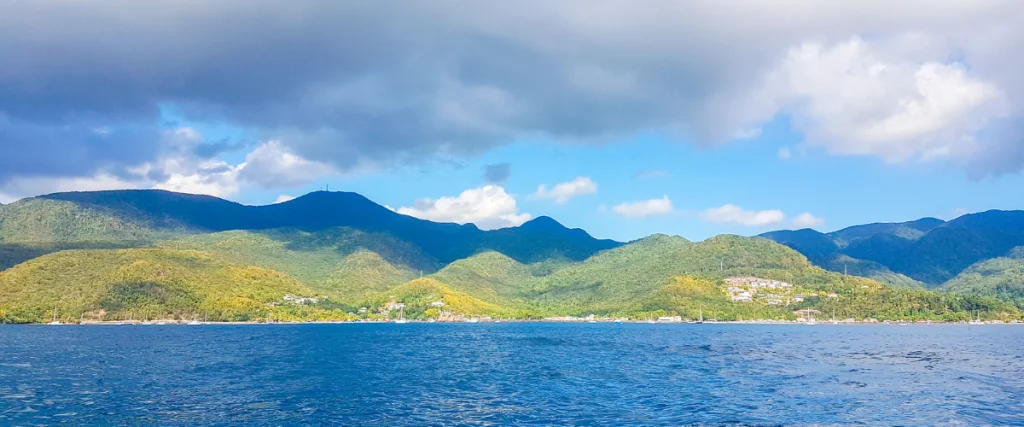
Here, forget the white sand and lagoons of Grande-Terre for a few hours. Located on the west coast of Basse-Terre, Malendure stands out for its gray-black volcanic sand, its tropical vegetation, and above all, the incredible richness of the seabed right off the beach.
Rising up before you are the famous Pigeon Islets, surrounding the heart of what is commonly known as the Cousteau Reserve. Now part of the Guadeloupe National Park under the name Pigeon Islets Core Area, this area is one of Guadeloupe’s iconic sites for discovering underwater flora and fauna.
And the good news is: you don’t need to be an experienced diver to enjoy it.
A black sand beach in the heart of Basse-Terre
The first thing that strikes you upon arriving at Malendureis, of course, the color of the sand.
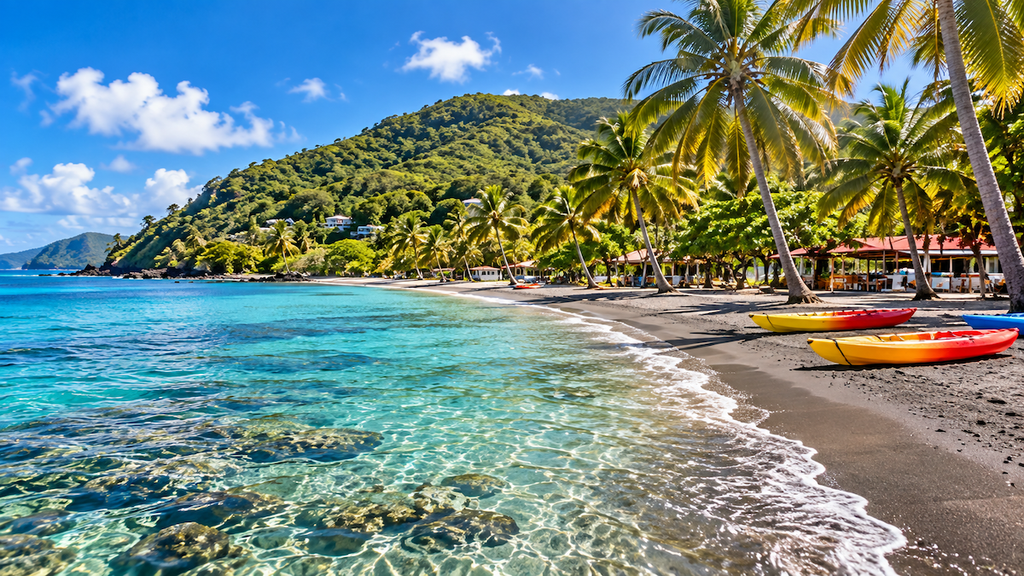
Its volcanic origin gives it a dark hue—ranging from gray to black—that contrasts sharply with the blue of the Caribbean Sea and the green vegetation of Basse-Terre. The setting is very different from the beaches of Sainte-Anne or Saint-François, but that is precisely what makes it so charming.
From the shore, your gaze is drawn directly to the Pigeon Islets, a true signature feature of the Malendure landscape.
However, the beach has become famous primarily for what happens beneath the water’s surface..
Seeing turtles at Malendure while snorkeling
It is likely one of the most memorable experiences of a trip to Guadeloupe: putting on a mask, entering the water, and having the chance to spot a sea turtle feeding in the seagrass beds..
Turtles—particularly green sea turtles—frequent the seagrass beds located in Malendure Bay. You can therefore observe them directly while snorkeling from the shore, without necessarily booking a boat excursion.
Of course, these are wild animals: their presence is never guaranteed..
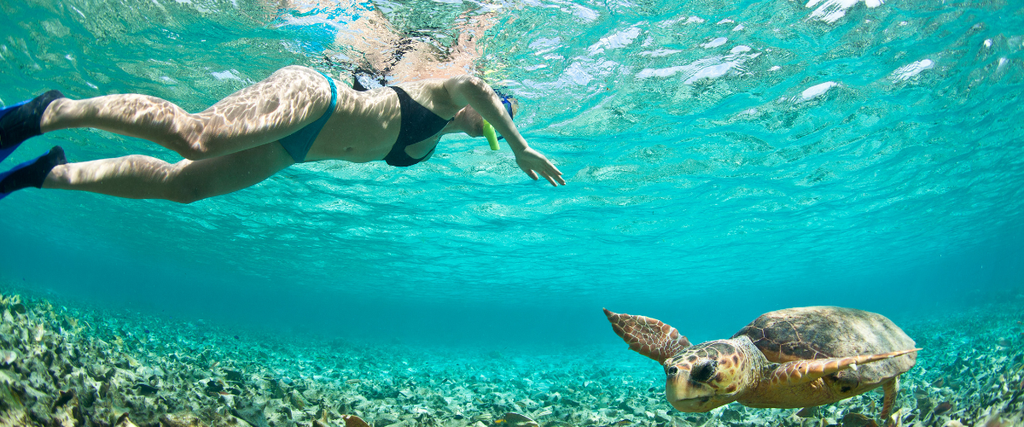
If you encounter one, simply enjoy the sight from a distance. It is important not to touch or chase them, block their path, or try to dive directly above them. Official guidelines specifically advise observing the turtles without disturbing them and preserving the seagrass beds where they come to feed.
A mask, a snorkel, and perhaps a pair of fins are all you need to turn a simple trip to the beach into a genuine discovery of Guadeloupe’s marine life.
The Cousteau Reserve, right across from Malendure
The Malendure beach is the main starting point for exploring the Cousteau Reserve, located around the Pigeon Islets.
This protected marine area is renowned for its tropical fish, corals, sponges, and turtles. The Pigeon Islets are now one of the major natural sites within the Guadeloupe National Park.
There are several ways to explore it.
Diving enthusiasts can book an introductory dive or a scuba excursion with the clubs based in Malendure. Those who prefer to stay on the surface can opt for snorkeling, a kayak trip, or even boat tours that allow you to view the seabed without diving.
This makes Malendure particularly appealing when family members have different interests: some can go diving while others relax on the beach or explore the underwater world from the surface.
Snorkeling right off the beach
You don’t necessarily have to go to the Pigeon Islets to see marine life.
From Malendure Beach, the seagrass beds and shallow waters offer a chance to spot various fish and, with a bit of luck, turtles.
For a more comprehensive experience, guided snorkeling excursions are also organized in the area. Instructors accompany participants, helping them discover local biodiversity while learning how to observe the marine environment without damaging it.
This is a great option if you are new to snorkeling or want to better understand what you are seeing underwater.
A lively beach with easy lunch options
Malendure is more than just a secluded beach.
The area is home to many water-sports professionals as well as restaurants and dining options, making it easy to plan a lunch break on-site before or after a sea excursion. The official tourist site lists nearby amenities such as beach restaurants, food trucks, dive centers, and restrooms.
You can easily arrive in the morning, enjoy the beach and snorkeling, have lunch on-site, and then continue exploring Basse-Terre in the afternoon.
In fact, that is what we particularly appreciate about Malendure: a visit doesn’t necessarily require a whole day—unless, of course, you decide to add an excursion to the Pigeon Islets or a scuba diving session.
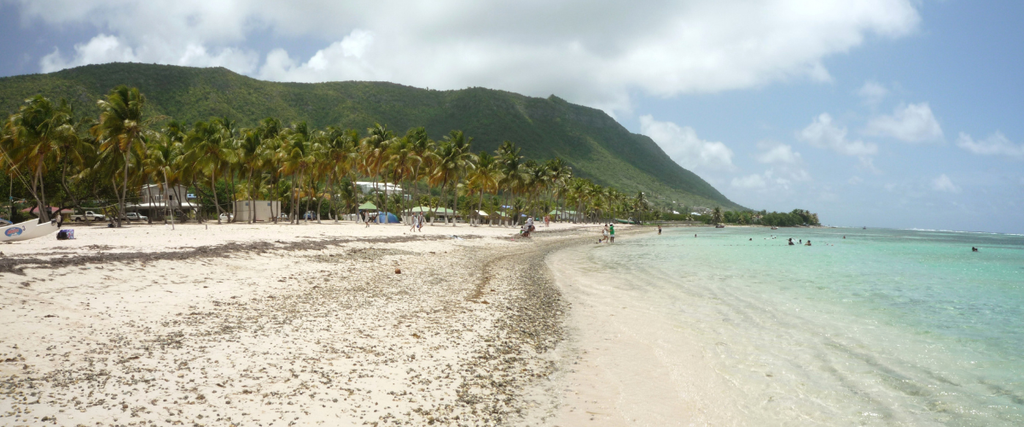
Half a day can be enough to discover Malendure.
Unlike some excursions that require a full day, Malendure fits easily into an itinerary for exploring Basse-Terre..
Arriving relatively early, for instance, allows you to spend a few hours there, go snorkeling, try to spot turtles, and have lunch before hitting the road again.
Arriving early offers another advantage: Malendure is a very popular destination and can get crowded. Travel guides often recommend arriving in the morning, especially to make parking easier during busy periods.
If you plan on scuba diving, kayaking, or a trip to the Pigeon Islets, you should naturally allow more time.
A must-visit beach for diving enthusiasts
Malendure is particularly well-known among divers.
The waters surrounding the Îlets Pigeon attract both those wishing to experience their first introductory dive in Guadeloupe and more experienced divers.
Several professional dive centers are located right in the area and offer trips to the Cousteau Reserve, including excursions tailored to different skill levels.
Even without scuba gear, you will quickly understand why this area is so popular: there is something fascinating to see everywhere in the water.
Remember to protect the seabed at Malendure
Malendure’s rich marine environment calls for adopting a few good habits.
Do not touch the turtles or corals, keep your distance from the animals, avoid trampling on seagrass beds, and—of course—do not leave any trash behind.
The tourist office also recommends choosing marine-friendly sunscreen and reminds visitors that corals, seagrass beds, and marine wildlife form a fragile ecosystem..
The best memory of a turtle in Malendure is that of an animal observed peacefully in its natural habitat, rather than one you tried to get as close as possible to just to snap a photo.
What should you bring to Malendure?
The essentials are quite simple: a swimsuit, water, sun protection, a mask and snorkel if you have them, and—ideally—fins if you really plan to explore the seabed.
A waterproof camera or a small underwater camera can also be a great idea, provided you never disturb the wildlife to get a shot.
And don’t forget that dark volcanic sand can get very hot in the sun; easy-to-slip-on shoes can be very welcome during the hottest part of the day.
Malendure: much more than just a beach
The Malendure beach in Guadeloupe is well worth the trip—not just for spreading out your towel on the sand, but for everything there is to discover in the surrounding area.
Volcanic sand, views of the Pigeon Islets, tropical fish, scuba diving, snorkeling, and the chance to spot sea turtles: Malendure is a true gateway to the underwater world of Basse-Terre..
You can easily spend a morning or half-day there, have lunch on-site, and then continue exploring the island. Conversely, diving and snorkeling enthusiasts could easily spend much more time there.
If you love the sea and want to discover another side of Guadeloupe, Malendure is definitely a place to include in your itinerary.