
Sainte-Anne, nestled on the southern coast of Grande-Terre in Guadeloupe, captivates visitors not only with its turquoise beaches but also with a rich historical heritage and a distinctive local identity . This corner of the archipelago offers far more than just a paradise setting: exploring the history of Sainte-Anne and immersing yourself in its Guadeloupean culture promises authentic discoveries at every turn. At Les Prairies Turquoises, we love sharing much more than just our villa rentals in Sainte-Anne: we invite you to discover the true soul of Sainte-Anne — a blend of dream beaches, living heritage, and collective memory.

A historical heritage rooted in the era of slavery
The history of Sainte-Anne remains inextricably linked to the era of slavery, which deeply marked the population and shaped collective memory. Over time, the town has preserved many traces of this difficult past, playing an active role in the recognition of Guadeloupean culture. Several iconic sites serve as reminders of these bygone eras, thereby integrating this historical heritage into the modern landscape.
Wandering through the narrow streets or visiting old plantation estates makes it possible to imagine life as it was during those turbulent centuries. Oral histories often complement these visible elements, allowing new generations to better understand their own history and enrich their local identity.
Which places embody this past?
Sainte-Anne still preserves many typical structures, such as small chapels or colonial buildings that have been transformed over time. These architecturalfeatures evoke a society once centered on sugarcane cultivation, in which enslaved people played a vital role. Some of these remnants are now showcased through guided tours focused on discovering the local cultural heritage,offering a sensory immersion into the past.
Other sites—sometimes lesser-known—retain a unique atmosphere. For instance, a few old mills remain on the outskirts of the town; they symbolize the hard labor associated with agricultural production. Far from being static, these buildings now play a part in passing on traditions to both locals and curious visitors.
How does history influence today’s society?
The memory of the era of slavery continues to shape the formation oflocal identity. It fuels commemorative celebrations, inspires syncretic religious practices, and encourages the residents of Sainte-Anne to preserve specific rituals unique to Guadeloupean culture. Descendants of freed slaves play a central role in highlighting family narratives.
Thus, understanding the history of Sainte-Anne makes it possible to grasp the importance placed on mutual respect, solidarity, and the preservation of intangible heritage. This shared remembrance shapes a society that is mindful of its past while remaining focused on an inclusive future.
A vibrant cultural heritage blending traditions and craftsmanship
The cultural heritage of Sainte-Anne is not limited to a few monuments or historical remains. The vitality of the municipality is expressed through living traditions,the diversity of craftsmanship and the constant influence of Guadeloupean culture., perceptible throughout the seasons.
Various aspects shape this cultural dynamic, blending European, African and Caribbean influences. The cuisine,craftsmanship and music paint a colorful and lively picture, reflecting deep local roots and constantly renewed creativity.
What are the main local festivals and customs?
From carnival to traditional markets, each celebration shows the residents’ attachment to their cultural roots. Sainte-Anne’s carnival draws people of all ages with its dazzling costumes, spirited rhythms and symbolic dances. This celebration echoes older rites inherited in part from the period of slavery, enriched by strong Creole influences.
Funeral vigils, known as “wakes,” also represent an important aspect of cultural heritage. They bring together songs, prayers, stories, and moments of sharing, demonstrating the strength of the community in passing down local customs. In this way, Guadeloupean culture remains alive in daily life.
What traditional skills endure in Sainte-Anne?
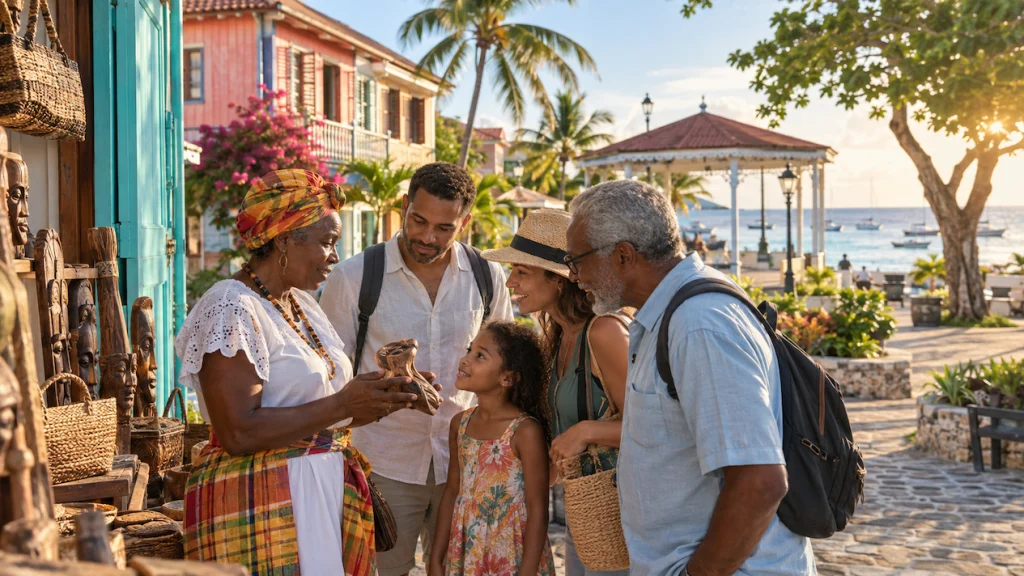
Thecrafts sector plays a major role in this seaside town. It is common to see palm-leaf baskets, woven using ancestral techniques, on the colorful market stalls. These objects reflect traditional craftsmanship, preserved primarily by women who practice techniques learned in childhood.
The preparation of traditional dishes is also an integral part of the local heritage. The unique flavors of *accras*, *colombo*, and coconut flan can be found in many families. Each recipe is passed down orally, ensuring the survival of these culinary delights typical of Guadeloupean culture. Finally, various workshops keep the traditions of basketry, pottery, and Creole sewing alive, showcasing a creativity rooted in both the past and the present.
Local architecture and the role of music in Guadeloupean culture
Observing thearchitecture in Sainte-Anne reveals a unique aesthetic blend. With their gable roofs, colorful facades, and openwork shutters, the houses reflect a subtle marriage of modernity and tradition. Traditional wooden houses—known as *cases*—stand alongside more modern structures that still honor the stylistic codes of Creole housing.
Public spaces, often lined with flamboyant trees and palms, provide a perfect setting for social interaction and conviviality. As you wander through these picturesque streets, you quickly realize how the built environment helps create a shared sense of belonging and fosters intergenerational bonds through a genuine respect for thearchitectural heritage.
- Traditional painted wooden houses
- Historic agricultural mills
- Lively markets with artisan stalls
- Historic churches and chapels
- Vibrant small squares and musical gathering spots
What role does music play in local identity?
It is impossible to talk about Guadeloupean culture without mentioning the music, which is omnipresent in Sainte-Anne. From *gwo ka* and *zouk* to *biguine*, musical styles tell the story of Sainte-Anne and express the full spectrum of collective emotions. Percussion instruments accompany everything from religious processions to late-night gatherings by the beach.
Numerous schools and musical groups pass on these sounds throughout the year, fostering interaction between generations. Dance and song complement this living art form, making the music a true backbone for strengthening unity and asserting the municipality’s cultural identity.
How does architecture influence community life?
Buildings arranged around the main square frequently become the setting for popular events. Traditional festivals, open-air concerts, or simple neighborly gatherings bring these familiar surroundings to life. Everyone naturally finds their place, helping to consolidate a local identity rooted as much in human warmth as in respect for the historical built heritage.
Through its protective walls, warm colors, and refined details, thearchitecture creates a sense of continuity between past and present. It facilitates the preservation of shared memories and fosters a collective desire to pass on and showcase the unique character of Sainte-Anne for future generations.
Why staying at Prairies Turquoises makes sense
By choosing to stay at Prairies Turquoises, you enjoy an ideal base: close to the town, beaches, and historic sites, while benefiting from the comfort of a villa with a pool, tropical garden, and sea view. It is the perfect opportunity to combine relaxation with cultural immersion: you can alternate between the beach, excursions, historical discoveries, local markets, and Creole evenings—all without having to change accommodation.
We believe that travel is also about understanding and respecting the history of a place. By staying here, you become both a spectator and a participant in conscious, respectful, and enriching tourism.